
Abidjan : le guide pour préparer votre séjour
Quartiers, lagune, gastronomie et excursions pour découvrir la capitale économique de la Côte d’Ivoire.
Abidjan: a guide to planning your stay
Districts, lagoon, food and day trips to discover Côte d’Ivoire’s economic capital.
Préparer votre voyage
Plan your trip
Liens partenaires : ils peuvent nous rapporter une commission, sans frais supplémentaires pour vous.
Partner links: they may earn us a commission at no extra cost to you.
HôtelsHotels 10
- Hôtels (Expedia)Hotels (Expedia)Comparez les offres sur ExpediaBrowse deals on Expedia
- Hôtels (Agoda)Hotels (Agoda)Comparez les offres sur AgodaBrowse deals on Agoda
- Hôtels (Trip.com)Hotels (Trip.com)Comparez les offres sur Trip.comBrowse deals on Trip.com
- Hôtels (HotHotels)Hotels (HotHotels)Voir les offres sur HotHotelsBrowse deals on HotHotels
- Hôtels (Booking.com)Hotels (Booking.com)Comparez les offres sur Booking.comBrowse deals on Booking.com
- Hôtels (lastminute.com)Hotels (lastminute.com)Voir les offres sur lastminute.comBrowse deals on lastminute.com
- Hôtels (Hotel Treats)Hotels (Hotel Treats)Piscine, spa et brunch sans nuitéePool, spa and brunch without staying overnight
- Hôtels (Iberostar)Hotels (Iberostar)Hôtels et resorts IberostarIberostar hotels and resorts
- Hôtels (Ocean Hotels)Hotels (Ocean Hotels)Hôtels au soleilSunny hotels
- Hôtels (OYO)Hotels (OYO)Hôtels au Royaume-UniHotels in the United Kingdom







Vols et transportsFlights and transport 10
- Parking et hôtels d’aéroport (Holiday Extras)Airport parking and hotels (Holiday Extras)Départs du Royaume-Uni : parking, hôtel, salonUK departures: parking, hotel, lounge
- VolsFlightsRéservez avec Trip.comBook with Trip.com
- Transfert aéroportAirport transferChauffeur : KiwitaxiPrivate driver: Kiwitaxi
- Vols (Kiwi.com)Flights (Kiwi.com)Comparez avec Kiwi.comCompare with Kiwi.com
- Transfert privéPrivate transferAéroport, port ou adresse : Welcome PickupsAirport, port or address: Welcome Pickups
- Vols (Aviasales)Flights (Aviasales)Comparez les vols avec AviasalesCompare flights with Aviasales
- Vols (Iberia)Flights (Iberia)Vols vers l’Espagne et au-delàFlights to Spain and beyond
- Vols (Booking.com)Flights (Booking.com)Réservez vos vols sur Booking.comBook flights on Booking.com
- Vol + hôtel (lastminute.com)Flight + hotel (lastminute.com)Séjours de dernière minuteLast-minute stays
- Taxi aéroport (Booking.com)Airport taxi (Booking.com)Réservez votre taxi à l’avanceBook your taxi in advance




Location de voitureCar rental 9
- Location de voitureCar rentalComparez avec LocalrentBrowse Localrent
- Location de voitureCar rentalGetRentacarGetRentacar
- Location de voiture (Europe)Car rental (Europe)Auto EuropeAuto Europe
- Location de voiture (DiscoverCars)Car rental (DiscoverCars)Comparez avec DiscoverCarsCompare with DiscoverCars
- Location de voiture (VIP Cars)Car rental (VIP Cars)Offres dans le monde entierDeals worldwide
- Location de voiture (QEEQ)Car rental (QEEQ)Comparez avec QEEQCompare with QEEQ
- Location de voiture (EconomyBookings)Car rental (EconomyBookings)Comparez avec EconomyBookingsCompare with EconomyBookings
- Location de scooters et vélosScooter and bike rentalRéservez avec BikesbookingBook with Bikesbooking
- Location de voiture (Booking.com)Car rental (Booking.com)Comparez avec Booking.comCompare with Booking.com


Activités et visitesActivities and tours 9
- Billets et visitesTickets and toursMusées et sites : TiqetsMuseums and sights: Tiqets
- Excursions et activitésDay trips and activitiesRéservez avec KlookBook with Klook
- Excursions et activitésTours and activitiesRéservez avec KKdayBook with KKday
- Visites guidées et audioguidesGuided tours and audio guidesRéservez avec WeGoTripBook with WeGoTrip
- Pass touristiqueCity passPlusieurs visites en un pass : Go CitySeveral attractions in one pass: Go City
- Visites et expériencesTours and experiencesRéservez avec IntuiBook with Intui
- Excursion privée en voiturePrivate sightseeing by carChauffeur local, vous choisissez les arrêts : Welcome PickupsLocal driver, you choose the stops: Welcome Pickups
- Visites et activités (Viator)Tours and activities (Viator)Réservez sur ViatorBook on Viator
- Attractions (Booking.com)Attractions (Booking.com)Billets et visites sur Booking.comTickets and tours on Booking.com



Bagages et imprévusLuggage and disruptions 3
- Consigne à bagagesLuggage storageDéposez vos valises près de la gare ou du centre : Radical StorageDrop your bags near the station or centre: Radical Storage
- Vol retardé ou annulé ?Flight delayed or cancelled?Vérifiez votre indemnisation avec AirHelpCheck your compensation with AirHelp
- Indemnisation de volFlight compensationRéclamez jusqu’à 600 € avec CompensairClaim up to €600 with Compensair


Assurance voyageTravel insurance 2

eSIM et interneteSIM and internet 7
- eSIM de voyageTravel eSIMInternet dès l’arrivée : AiraloData on arrival: Airalo
- eSIM pour voyagerTravel eSIMData mobile avec SailyMobile data with Saily
- eSIM YesimYesim eSIMData mobile dans le monde entierMobile data worldwide
- eSIM GigSkyGigSky eSIMForfaits data voyageTravel data plans
- SIM DrimsimDrimsimUne SIM pour voyager sans roamingOne SIM to travel without roaming
- eSIM For UeSIM For UeSIM de voyage pour plus de 200 destinationsTravel eSIM for 200+ destinations
- eSIM BambooSIMData mobile pour voyager, activation sur votre téléphone
- BambooSIM eSIMTravel data, activated on your phone


Quand partir
Abidjan est chaude et humide toute l’année. Les saisons des pluies, surtout vers mai-juillet, apportent de fortes averses ; les périodes plus sèches, de décembre à mars environ, sont souvent plus confortables pour sortir.
Où loger
- Le Plateauquartier d’affaires et administratif, avec grands hôtels et bureaux.
- Cocodyrésidentiel et animé, avec de nombreux restaurants, bars et hôtels (notamment vers la Riviera et les Deux-Plateaux).
- Marcory (Zone 4) et Treichvillequartiers vivants, avec restaurants, marchés et vie nocturne.
Se déplacer
- L’aéroport Félix-Houphouët-Boigny se trouve à Port-Bouët, au sud de la ville.
- La ville est étendue et traversée par la lagune : les ponts peuvent être saturés aux heures de pointe, prévoyez de la marge.
- Les taxis et les voitures avec chauffeur sont courants ; convenez du prix à l’avance si le trajet n’est pas au compteur.
À voir et à faire
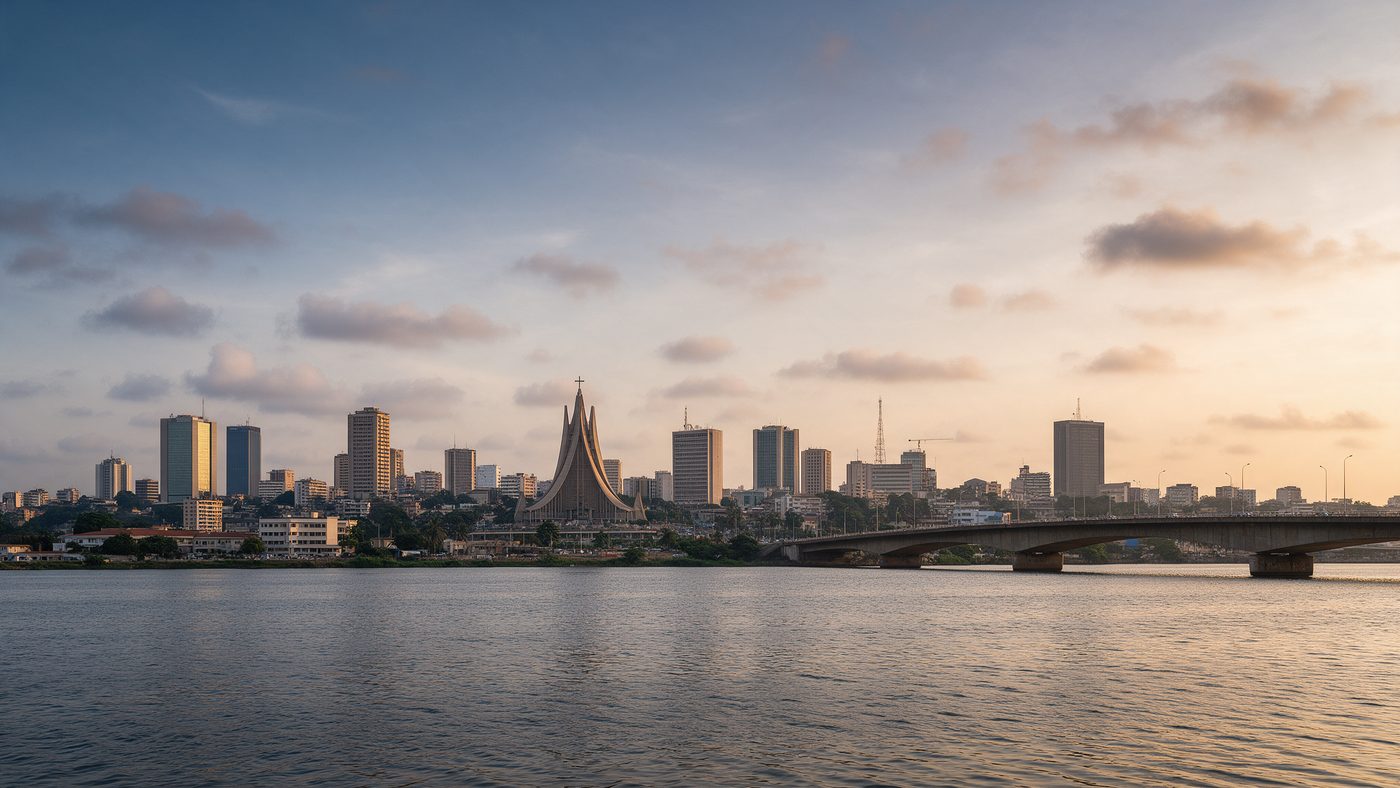
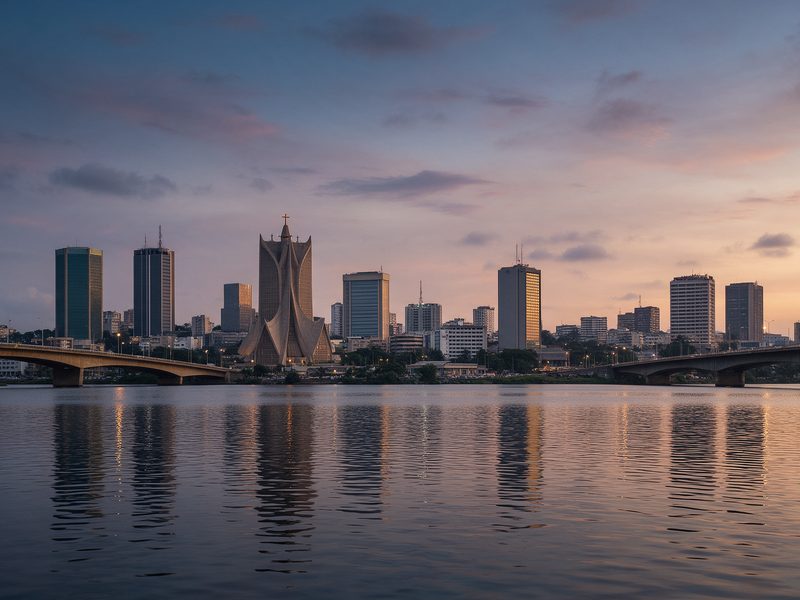
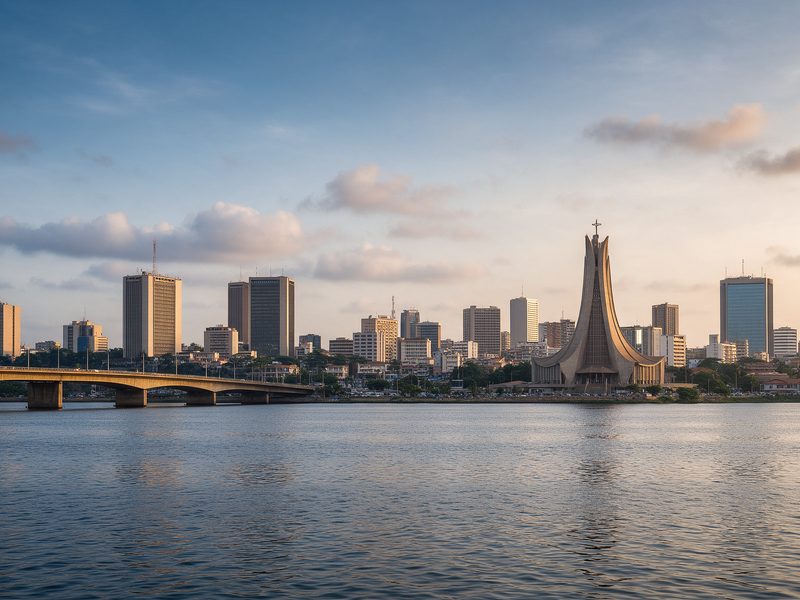
- Cathédrale Saint-Paul au Plateau, remarquable par son architecture moderne.
- Parc national du Banco : forêt tropicale à l’intérieur de l’agglomération.
- Marchés de Treichville et d’Adjamé : couleurs, tissus et produits locaux.
- Grand-Bassam : ancienne capitale coloniale classée à l’UNESCO, à environ une heure de route, avec plage et quartier historique.
- Sorties sur la lagune et plages de la côte, selon les conditions.
À goûter
L’attiéké (semoule de manioc) avec du poisson ou du poulet grillé, l’alloco (bananes plantains frites), le kédjenou (ragoût mijoté) et le garba, plat de rue très populaire.
Itinéraire sur 4 jours
- Jour 1 : Plateau, cathédrale Saint-Paul, promenade sur les bords de lagune.
- Jour 2 : parc du Banco le matin, puis restaurants et vie de quartier à Cocody.
- Jour 3 : excursion à Grand-Bassam.
- Jour 4 : marchés de Treichville ou d’Adjamé, achats d’artisanat.
When to go
Abidjan is hot and humid all year. The rainy seasons, mainly around May to July, bring heavy downpours; the drier periods, roughly December to March, are often more comfortable for going out.
Where to stay
- Le Plateauthe business and administrative district, with large hotels and offices.
- Cocodyresidential and lively, with many restaurants, bars and hotels (notably around the Riviera and Deux-Plateaux).
- Marcory (Zone 4) and Treichvillelively districts with restaurants, markets and nightlife.
Getting around
- Félix-Houphouët-Boigny airport is in Port-Bouët, south of the city.
- The city is sprawling and crossed by the lagoon: bridges can be jammed at rush hour, so allow extra time.
- Taxis and cars with drivers are common; agree on the fare in advance if the ride has no meter.
What to see and do
- Saint-Paul Cathedral in Le Plateau, notable for its modern architecture.
- Banco National Park: tropical forest inside the urban area.
- Markets in Treichville and Adjamé: colours, fabrics and local produce.
- Grand-Bassam: the former colonial capital, a UNESCO site, about an hour’s drive away, with a beach and historic quarter.
- Lagoon outings and coastal beaches, depending on conditions.
What to taste
Attiéké (cassava semolina) with grilled fish or chicken, alloco (fried plantains), kedjenou (slow-cooked stew) and garba, a very popular street dish.
A 4-day itinerary
- Day 1: Le Plateau, Saint-Paul Cathedral, a walk along the lagoon.
- Day 2: Banco park in the morning, then restaurants and neighbourhood life in Cocody.
- Day 3: a trip to Grand-Bassam.
- Day 4: Treichville or Adjamé markets, crafts shopping.

Conseils pratiques
- La monnaie est le franc CFA (XOF).
- Planifiez vos déplacements en évitant les heures de pointe.
- Vérifiez les formalités d’entrée et les recommandations sanitaires du moment auprès des sources officielles.
Questions fréquentes
Quel quartier pour un séjour d’affaires ?
Le Plateau ou Cocody, selon l’emplacement de vos rendez-vous.
Quel quartier pour sortir le soir ?
Marcory (Zone 4) et Cocody concentrent restaurants et bars.
Practical tips
- The currency is the CFA franc (XOF).
- Plan journeys to avoid rush hour.
- Check current entry requirements and health recommendations with official sources.
FAQ
Which district for a business trip?
Le Plateau or Cocody, depending on where your meetings are.
Which district for nights out?
Marcory (Zone 4) and Cocody have the most restaurants and bars.